

Eating Disorder Treatment
Expert Support for Eating Disorders and Disordered Eating
Serving Westchester County and surrounding communities through in-person care in Mount Kisco and telehealth throughout New York and Connecticut.
You Are Not Alone. We Can Help.
When you are struggling with an eating disorder, thoughts about food, weight, and your body can begin to take over. You may feel trapped in patterns you cannot seem to change, exhausted by the constant mental noise, or ashamed that something so painful has become so difficult to control.
An eating disorder can affect far more than what or how you eat. It can interfere with your health, relationships, confidence, and ability to feel fully present in your own life. Part of you may want relief, while another part feels uncertain about letting the eating disorder go.
At Sirona Therapy, we understand how complicated this struggle can be. We will meet you with compassion, respect, and genuine understanding, without judgment or pressure. Together, we will begin to make sense of what the eating disorder has come to mean in your life and help you take manageable steps toward change.
You deserve a life that is not controlled by fear, shame, food rules, or distress about your body. Recovery may feel far away right now, but you do not have to find your way there alone.

A Treatment Plan Built Around You
Our goal is to help you regain a sense of control and develop a safer, more trusting relationship with food, your body, and yourself. We do not believe in one-size-fits-all treatment. We begin by listening carefully to your story, understanding the patterns that are affecting your life, and learning what you hope will change. From there, we develop a treatment plan shaped around your individual needs and goals.
Our work is integrative, trauma-informed, and grounded in a deep understanding of the emotional roots of eating disorders. Depending on your needs, treatment may draw from:
- Cognitive Behavioral Therapy (CBT)
- Dialectical Behavior Therapy (DBT)
- Acceptance and Commitment Therapy (ACT)
- Internal Family Systems (IFS) and other parts-informed approaches
- Mindfulness-based interventions
- Psychodynamic psychotherapy
These approaches can help you recognize the patterns that keep the eating disorder in place, develop more effective ways of responding to difficult emotions, and reduce the shame and self-criticism that often accompany struggles with food and body image. We also explore what the eating disorder has come to represent or provide in your life, so that change can happen at a deeper level rather than focusing only on symptoms.
Because eating disorders can affect both emotional and physical health, we may also collaborate with dietitians, physicians, psychiatrists, or other members of your treatment team when appropriate. This coordinated approach helps ensure that your care is thoughtful, responsible, and responsive to the full complexity of what you are experiencing.
You do not have to change everything at once. We will work with you at a pace that feels manageable, helping you build greater confidence, flexibility, and trust in yourself as you move toward recovery.
Eating Disorders and Body Image Concerns We Treat
Anorexia Nervosa:
Anorexia nervosa can make food, weight, and control feel central to nearly every part of your life. You may find yourself eating too little, following increasingly rigid rules, exercising compulsively, or experiencing intense fear around eating and weight gain. Even when you recognize the toll these patterns are taking, changing them may feel frightening or impossible.
Anorexia can affect your energy, concentration, mood, relationships, and physical health. It is not simply about wanting to be thin. The eating disorder may have become intertwined with how you manage distress, perfectionism, uncertainty, or a powerful need to feel in control.
Treatment addresses both the immediate eating disorder behaviors and the emotional needs beneath them. We help you reduce fear and rigidity, restore adequate nourishment, and rebuild trust in your body and yourself. When appropriate, we also coordinate with medical and nutritional providers so that every aspect of your recovery receives the attention it needs.
Bulimia Nervosa:
Bulimia nervosa can create a painful cycle of binge eating, feeling out of control, and then trying to compensate through vomiting, fasting, laxative misuse, or excessive exercise. The cycle is often accompanied by secrecy, panic, guilt, or shame and can feel impossible to interrupt on your own.
Bulimia is not always visible from the outside, but repeated bingeing and compensatory behaviors can have serious physical and emotional consequences. You may feel trapped between rigid attempts to control your eating and episodes that leave you feeling even more ashamed and determined to regain control.
Therapy can help you understand what triggers this cycle, challenge all-or-nothing beliefs about food and your body, and develop more regular and flexible patterns of eating. We also help you build safer ways to manage difficult emotions, reduce shame, and begin trusting yourself again.
Binge Eating Disorder:
Binge eating disorder involves recurring episodes of eating a large amount of food within a short period of time while feeling unable to stop or control what or how much you are eating. Unlike bulimia, these episodes are not regularly followed by vomiting or other compensatory behaviors. You may eat rapidly, beyond comfortable fullness, or in secret, then experience guilt, shame, or distress afterward.
Binge eating disorder is not a lack of willpower. Binge eating can become part of a painful cycle involving emotional distress, self-criticism, secrecy, and repeated attempts to regain control. The shame surrounding it can make the struggle feel especially isolating.
Treatment can help you identify the emotional and situational patterns connected to binge eating, develop a more consistent and flexible relationship with food, and find other ways to respond when difficult feelings become overwhelming. Recovery does not have to be built around punishment, shame, or another rigid set of rules.
Body Image Concerns:
Body image concerns can take up far more space in your life than people realize. You may spend a great deal of time checking or avoiding mirrors, comparing your body with other people’s, repeatedly changing clothes, avoiding photographs or social situations, or feeling that your worth depends on how you look.
Body image distress can exist alongside an eating disorder or on its own. It may affect your confidence, relationships, comfort with intimacy, and ability to be fully present in your life. Over time, the constant self-monitoring and criticism can become exhausting.
Healing does not require forcing yourself to love every part of your appearance. It can begin with less judgment, greater body neutrality, and a growing ability to care for your body without allowing appearance to define your value. We help you challenge painful beliefs, reduce checking and avoidance, and develop a steadier, more compassionate relationship with yourself.
Explore Reclaiming Your Reflection, our free body image workbook
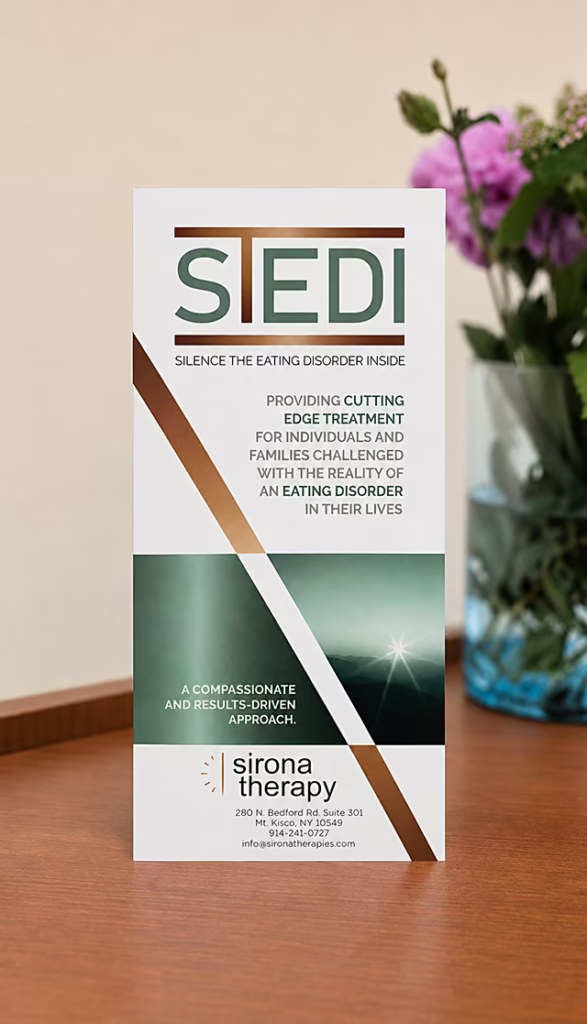
STEDI™ (Silence the Eating Disorder Inside)
STEDI™ is Sirona Therapy’s signature framework for eating disorder treatment. Developed by Jennifer L. Zauner, LCSWR, through more than 20 years of specialized clinical work, it gives treatment a clear direction while allowing care to remain deeply individualized. Clinicians providing eating disorder treatment at Sirona Therapy are educated to work within this framework.
The name reflects an important part of recovery: learning to recognize the eating disorder’s rules, fears, and self-critical messages without allowing them to control your choices or define who you are. Together, we explore what the eating disorder has come to mean in your life, what purpose it may be serving, and what continues to keep it in place.
At Sirona Therapy, we get to the root of things. We look beyond the visible symptoms to identify the underlying emotions, beliefs, experiences, and needs that may be driving the eating disorder. This includes exploring patterns involving shame, perfectionism, control, body image, relationships, and difficulty managing painful emotions.
In our experience, clients often begin making meaningful connections early in treatment between their thoughts, feelings, behaviors, and eating disorder symptoms. These insights can help reduce the disorder’s controlling grip and create momentum for change. Treatment also supports greater awareness of your body’s signals and a more flexible, trusting relationship with food and yourself.
When appropriate, we coordinate with dietitians, physicians, psychiatrists, and other providers so your care remains connected and responsive to your needs. Our goal is to help you experience greater freedom around food, increased trust in yourself, and more room in your life for relationships, purpose, and self-respect.
You Can Begin With a Conversation
Reaching out can feel difficult, especially when part of you may still feel uncertain about change. You do not need to have everything figured out before contacting us. A free consultation gives you an opportunity to share what has been happening, ask questions, and learn whether Sirona Therapy may be the right fit for your needs.